BBR · Symptom-led drivetrain diagnostic
Why your bike chain skips—and what to check first
Do not reach for the barrel adjuster yet. First decide whether the chain changed gears, jumped teeth, hit one stiff link, or stopped driving the wheel.
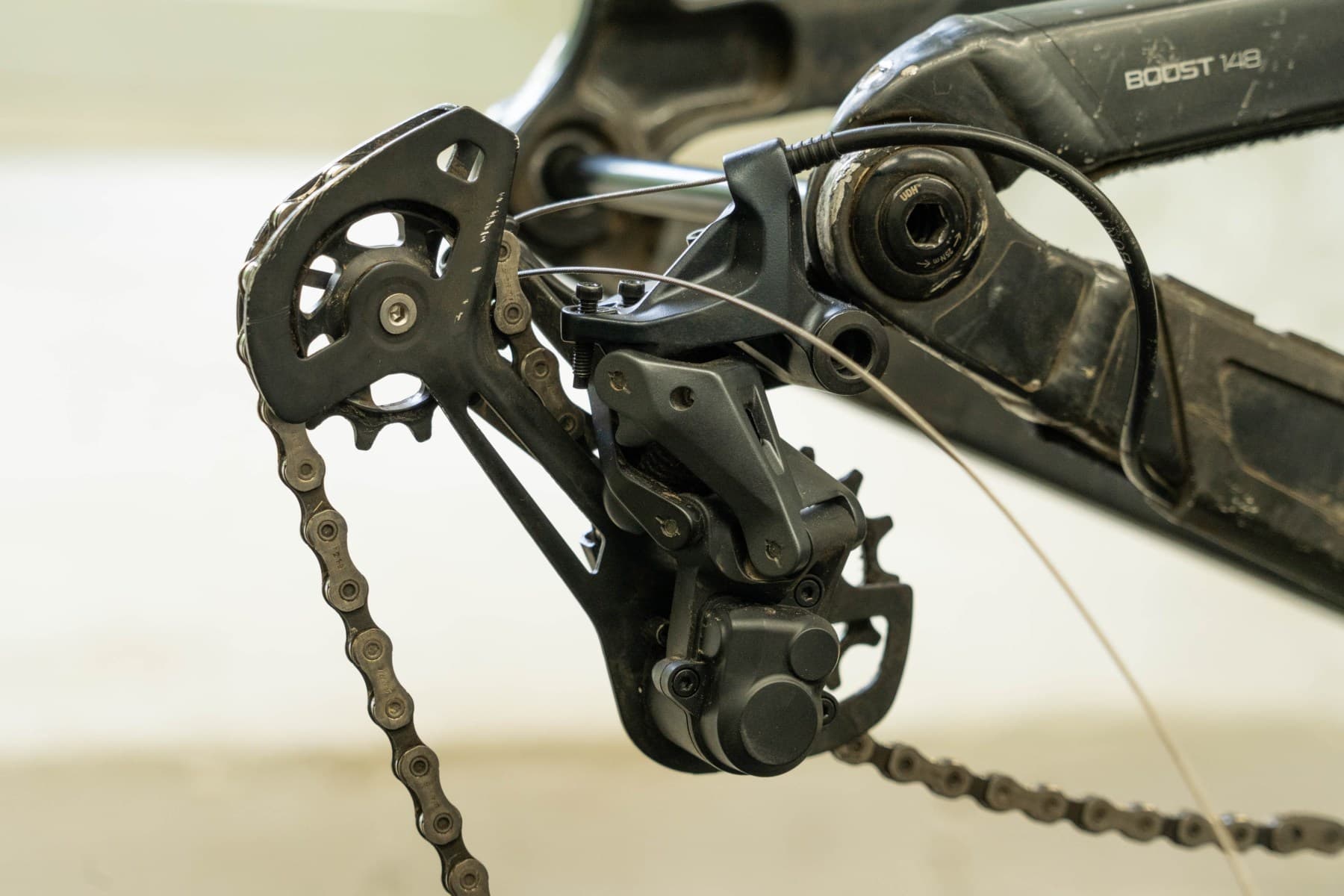

Symptom sorter
What did the chain actually do?
Choose the closest observation. Test only with the bike stable, fingers clear and light hand pressure—never by standing on the pedals.
If the chain dropped, jammed, entered the spokes, or the derailleur looks bent, skip the test and choose the stop condition.
The useful distinction
“Skipping” describes a feeling. The visible chain movement identifies the diagnostic path.
Four faults can create the same pedal lurch
| What you see | Working label | First checks |
|---|---|---|
| Chain shifts sideways | Ghost shift or poor indexing | Wheel/cable seating, indexing, cable friction, hanger alignment, local tooth damage |
| Chain stays on one rear cog | Tooth skip under load | Chain wear, sprocket wear, chain/sprocket mismatch, damaged link or tooth |
| Hitch repeats every few crank turns | Tight or damaged link | Backpedal slowly and watch the chain hinge around each pulley |
| Cranks turn but drive vanishes | Freehub/freewheel engagement loss | Stop load-testing; the ratchet path needs service or replacement diagnosis |
.jpg)
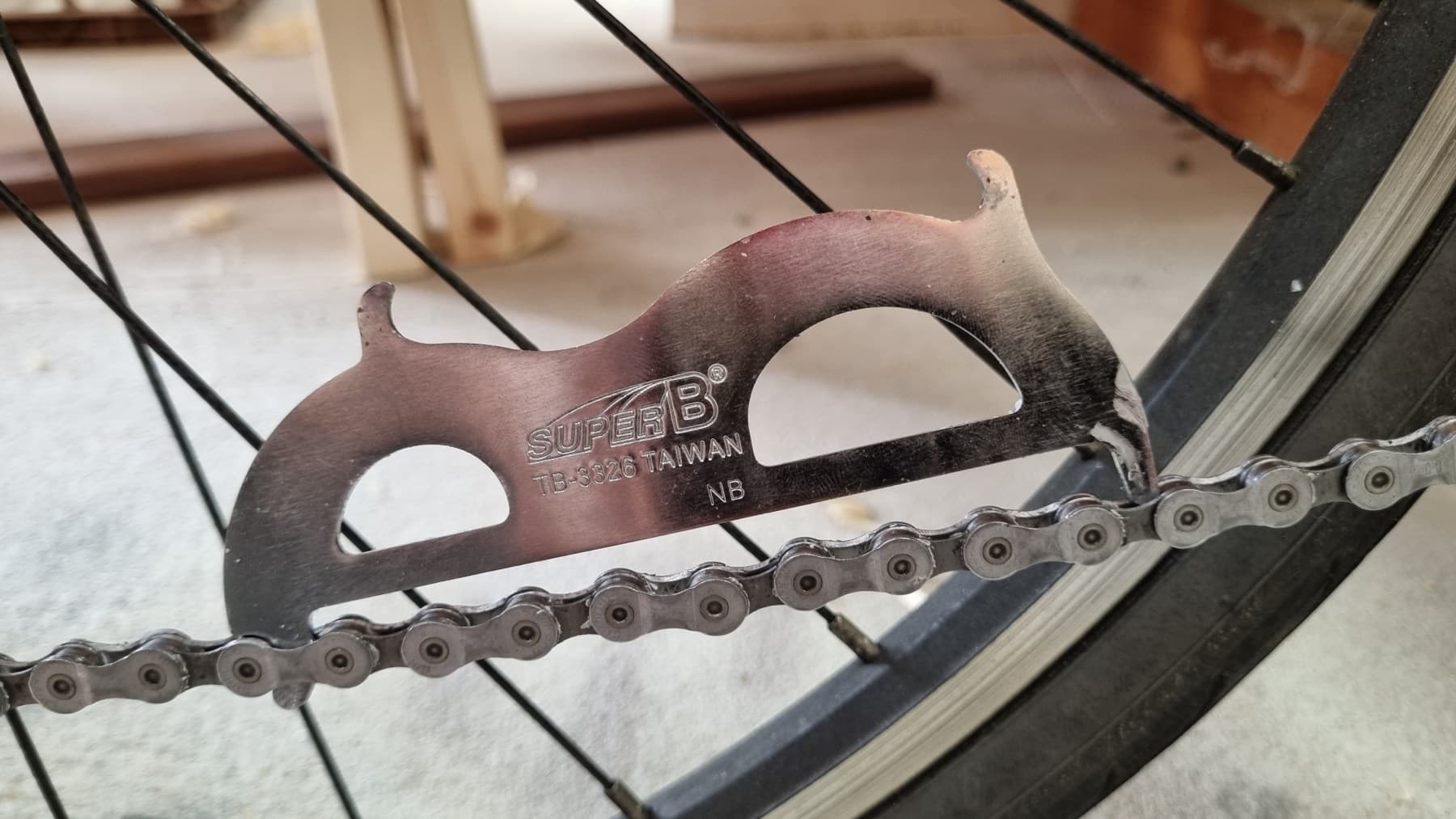
Measure—do not eyeball
Chain “stretch” is wear inside the links
As rollers and rivets wear, the chain's pitch grows and it meshes poorly with sprockets and chainrings. Park Tool lists consistent slipping under load as a worn-chain symptom, but also says shifting must be correctly set and the chain clean and lubricated before the measurement becomes useful.
5–10 speed
Park's general guide: replace by 0.75% wear.
11–13 speed
Park's general guide: replace by 0.5% wear.
Maker wins
Use the chain/drivetrain manufacturer's actual limit.
Inspection order
Run the cheap observations before the expensive repair
- 01
Stop on visible damage
Do not continue if the chain is cracked, twisted or jammed; the derailleur or hanger is bent; teeth are broken; the wheel is loose; or the chain can enter the spokes.
- 02
Recreate only without riding load
Support the bike securely and pedal lightly by hand. If the fault appears only while standing or climbing, do not reproduce it for diagnosis.
- 03
Watch whether the chain changes cogs
A sideways move points toward indexing, cable or alignment. A lurch while remaining on the same cog points toward chain-and-sprocket engagement.
- 04
Backpedal and follow one full chain loop
Watch every link as it bends around the derailleur pulleys. A tight link will stay straighter and make a repeating hop.
- 05
Measure wear with the right checker
Use a tool compatible with the exact chain and follow its maker’s replacement threshold. A wear number does not identify the rear sprocket system.
- 06
Use service history
A new chain that skips on old favorite cogs is a strong wear-mismatch clue. A problem that began after wheel removal or impact makes seating and alignment more important.
New chain, old sprockets
A new chain can reveal wear that the old chain had learned
Park Tool notes that skipping after chain replacement can indicate worn cassette or freewheel cogs. The new chain has the correct pitch; teeth worn to the previous chain may no longer hold it under load.
Do not buy a rear cluster from tooth shape alone. Identify whether it is a cassette or threaded freewheel, then confirm speed, range, driver/thread, chain, derailleur capacity, spacers and lockring.
Identify cassette vs freewheel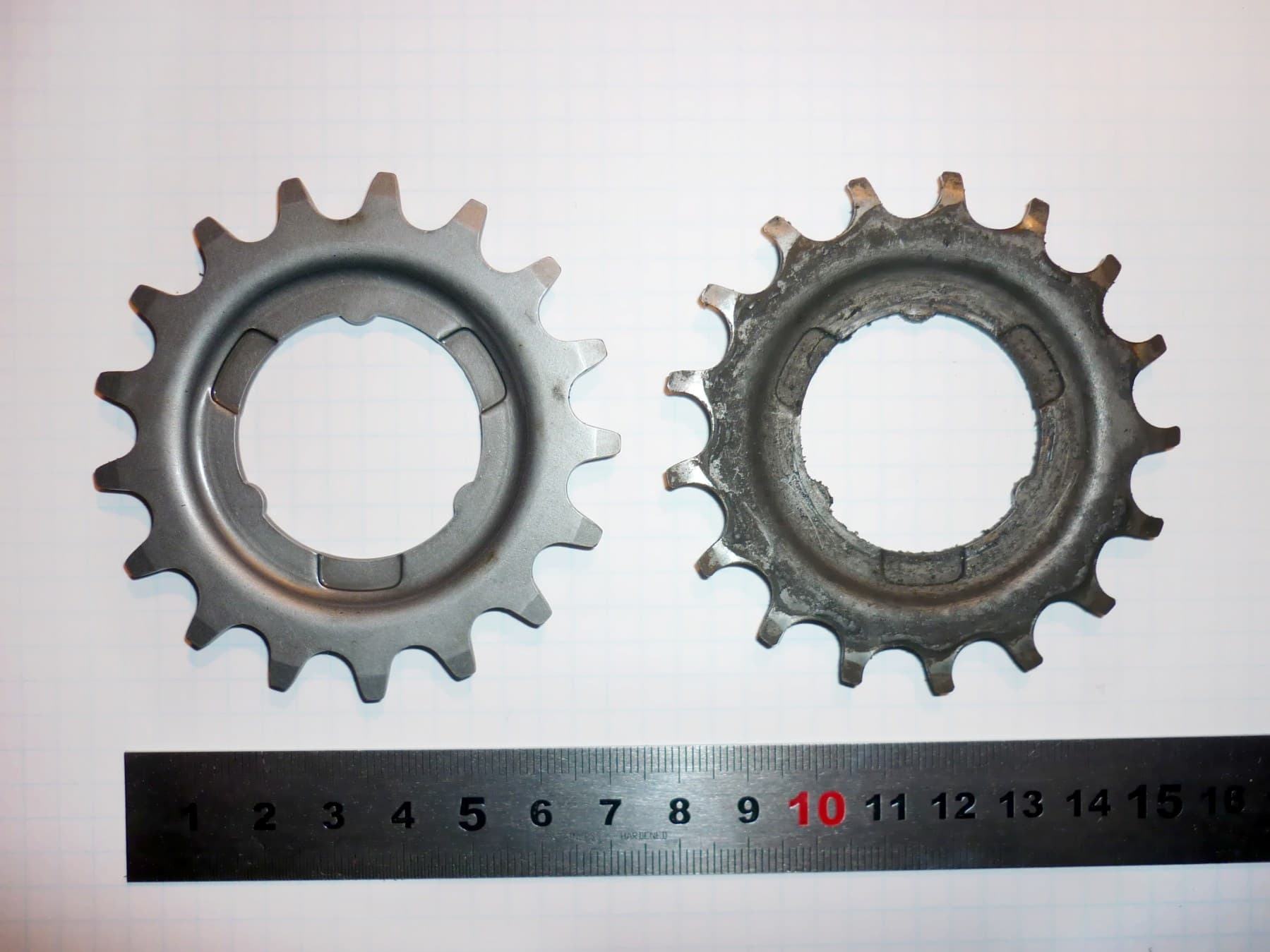

Stop conditions
A skipped pedal stroke can become a crash
- The chain drops, jams, rides toward the spokes, or catches the frame.
- Any link is cracked, twisted, bent, corroded through, or has a displaced rivet or unsecured connector.
- The derailleur or hanger is visibly bent, loose, cracked, or contacting the wheel.
- The wheel, axle, dropout, cassette/freewheel, chainring or crank has play or visible damage.
- Rear-wheel drive disappears intermittently without a visible chain jump.
- The fault needs hard pedaling, standing, road speed, or motor power to reproduce.
Shimano instructs riders to check for chain damage, skipping and unintended shifting and to consult a dealer or agency if a problem is found. Walking the bicycle is cheaper than turning an uncertain drivetrain fault into a loss of control.
Technical references
Follow the component record for the actual bike
- Park Tool rear-derailleur troubleshooting — indexing, cable friction, wear and favorite-cog skipping patterns.
- Park Tool chain-wear measurement — checker use and general replacement thresholds.
- Park Tool tight-link and damaged-chain guide — how to observe a link at the pulley and when damage changes the repair.
- Park Tool derailleur-chain replacement — chain sizing, connector paths and post-replacement sprocket wear.
- Park Tool freehub service — ratchet-pawl slipping, service limits and replacement.
- Shimano general operations manual — inspection warnings for chain damage, skipping and unintended shifting.
This page is a practical decision guide. It does not replace the service instructions for the bicycle, chain, sprockets, derailleur, shifter or hub.