Chain cleaning guide
How to clean and lubricate your bike chain
Do not start with “which degreaser?” Start with the chain maker, the oil or wax already present, the contamination, and the surfaces you must protect. Those four facts determine the safe method.
A focused decision path for this exact job. Verify fit and safety details against the current maker instructions.

Chain Care Router
Four details help you choose a cleaning method that suits your chain.
Build the right cleaning path before opening a bottle
Choose the closest known state. “Unknown” is a valid answer—it produces an identification plan instead of a risky guess.
0 of 4 facts selected
The base sequence
The order stays stable. The chemistry, removal, water, application, and timing do not.
Clean the chain you actually have—not an imaginary universal chain
- 01
Identify the state
Record chain/drivetrain maker, model or readable markings, connector, current oil/wax/factory treatment, and what contamination is actually present. If those facts are unknown, preserve evidence and keep the first pass dry.
- 02
Protect the bicycle
Keep cleaner and lubricant away from brake rotors/pads or rim tracks/shoes, tires, bearings, paint, battery, motor, wiring and connectors. Power an e-bike down according to its instructions.
- 03
Remove loose contamination first
Use a dry lint-free cloth and non-damaging brush when the maker permits. Escalate to water, neutral detergent, another cleaner, or a chain device only through the exact chain/system procedure.
- 04
Dry, lubricate, and wipe
Meet the required dry or cure state, apply the exact oil or wax at the specified location and amount, allow its stated dwell/cure time, and remove exterior excess without contaminating the bicycle.
Keep using a suitable lube you already own. If you need to choose one, compare wet, dry and wax chain lubes.
Maker differences
A bottle label cannot override the chain and drivetrain instructions.
“Degrease it” is not one cross-brand instruction
| System | Maker-backed path | Critical boundary |
|---|---|---|
| Shimano ↗ | Neutral-detergent cleaning and lubrication appear in the applicable chain guidance. | Avoid alkali- or acid-based rust cleaners; verify the exact chain/QUICK-LINK document. |
| Campagnolo 11s/12s ↗ | Clean more frequently after wet, dusty, or muddy use; use the manual’s brush/cloth and neutral-detergent sequence. | The applicable manual says not to use degreasers or remove the chain for cleaning; lubricate rollers drop by drop. |
| SRAM ↗ | Use the exact system path to clean/rinse as permitted, dry, and lubricate. | Do not soak or store drivetrain/electronic components in cleaner or liquid; protect plastics and electronics. |
| KMC ↗ | Start with dry cloth/brush; use neutral detergent if the applicable instruction calls for it. | Avoid dipping in aggressive degreasers; oil and wax care use separate preparation/application branches. |
Stop conditions
A clean-looking chain can still be unsafe
- A plate is cracked, twisted or severely corroded; a pin is displaced; or a connector is damaged, unknown, or improperly secured.
- The chain binds, has a persistent stiff link, jumps, skips, drops, jams, or can enter the spokes, wheel, frame, motor, or chain guard.
- Cleaner or lubricant reaches a disc rotor/pad, rim-braking track/shoe, tire, electrical connector, battery, motor, or another prohibited surface.
- The planned cleaner, immersion, removal, quick-link reuse, water, drying, or lubricant step conflicts with the current maker instructions.
- The only way to reproduce the problem is hard pedaling, road speed, standing load, or motor power.
- Waste cannot be safely contained, stored, and disposed of under the product label and local rules.
Products and tools
Four supplies to check before buying
Specification first
Brush and cloths
Non-damaging bristles, lint-free material, reachable chain surfaces, cleanable/reusable construction, and enough cloths to remove exterior residue without moving it to brakes or tires.
Exact model · fit not confirmed
Specification first
Cleaner
Exact chain/current-lubricant compatibility; chemistry and dilution; immersion/removal permission; rinse/wipe and dry process; finish, brake, plastic/electronic, storage, ventilation, and disposal boundaries.
Exact model · fit not confirmed
Specification first
Chain-cleaning device
Chain width and clearance, single-speed limitations, fluid capacity, permitted cleaner, spill control, direction of use, and confirmation that the chain maker allows that method.
Exact model · fit not confirmed
Specification first
Lubricant or wax
Oil/wax system, chain/coating compatibility, riding conditions, preparation state, application point and amount, dwell/cure, wipe-off, reapplication trigger, temperature and storage.
Exact model · fit not confirmed
How to verify
About this guide
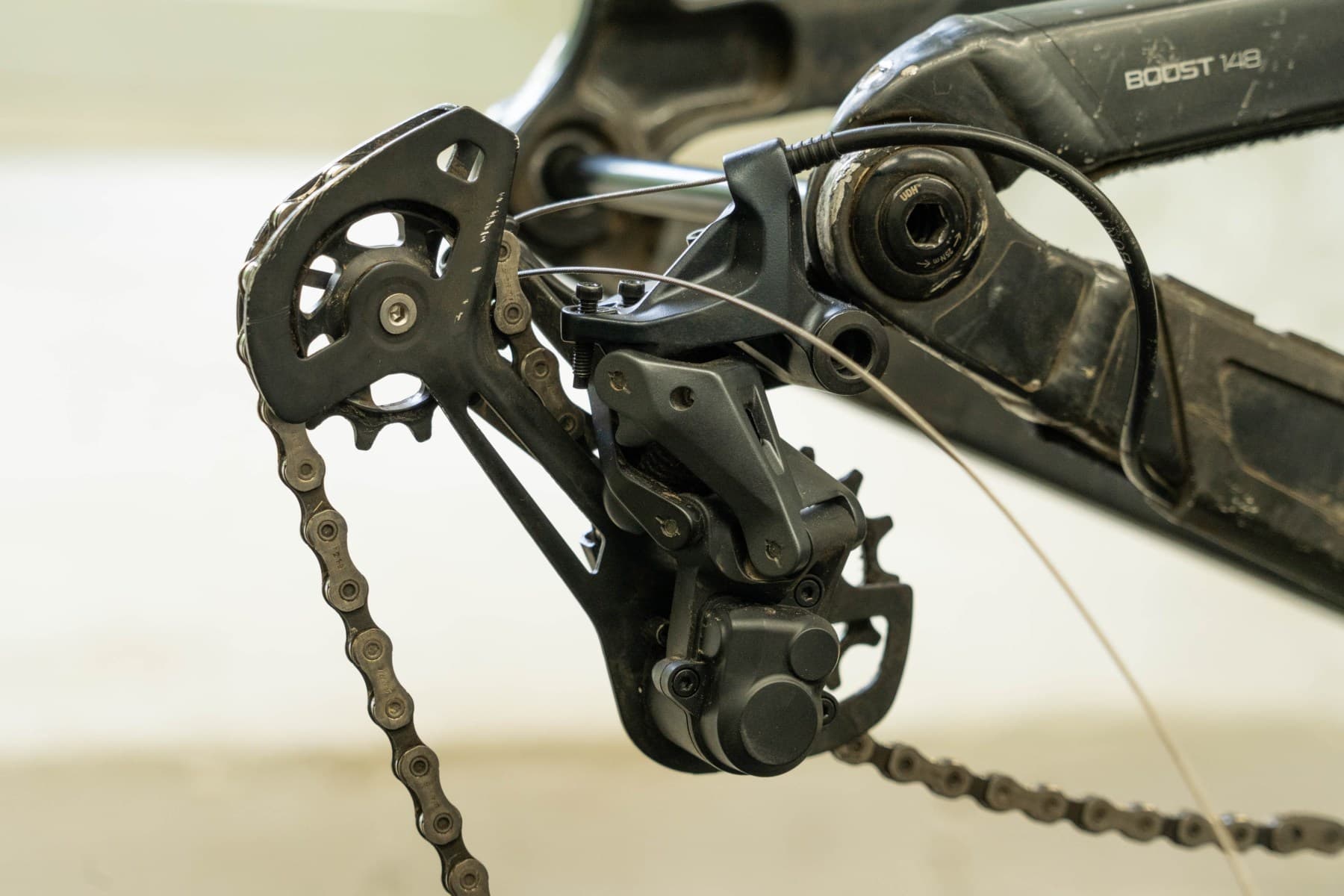
This is a practical decision guide. The router converts current maker instructions into a conservative decision path; it does not claim that this site cleaned your chain, used the pictured bicycle, or tested a cleaner or lubricant.
We have not tested cleaning time, residue, chain wear, mileage, friction, or product performance. Use the linked manufacturer instructions for your chain and chosen cleaner or lubricant.
- Shimano manuals and technical documents
- SRAM Eagle AXS Transmission cleaning
- KMC chain cleaning and KMC chain lubrication
- Park Tool CM-5.3 device boundaries — tool operation and compatibility only; not chain-maker permission.