
Stop
Crash, bar or clamp damage, cracking, or a brake function sharing the control routes to whole-control assessment before parts comparison.
BBR · symptom / control / exact-source Check
A gear display cannot tell you whether the cable, housing, derailleur, electronic state, integrated brake control, or shifter failed—or whether a similar nine-speed lever shares the correct pull and family.
Match the repair or replacement path ↓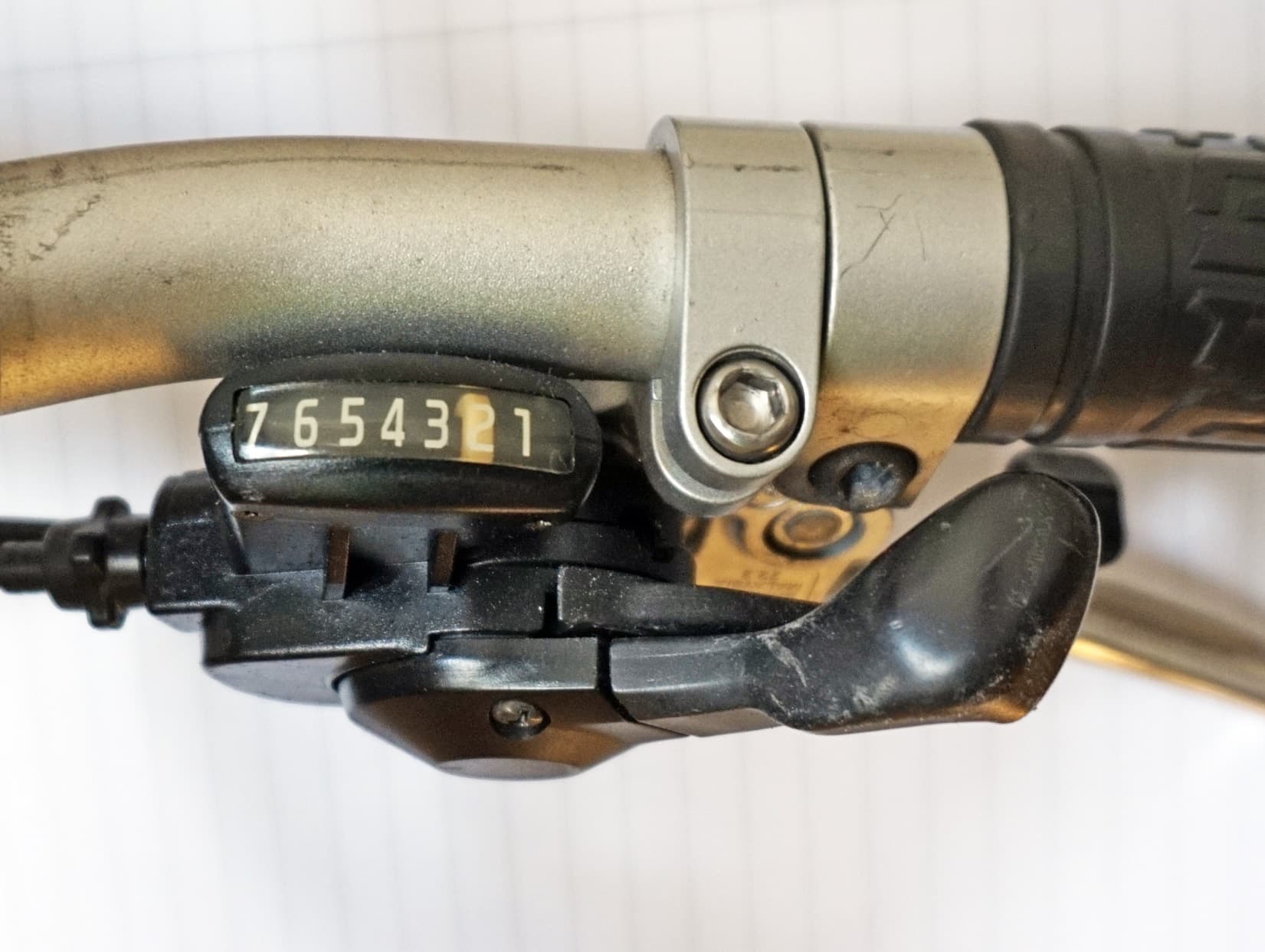
A focused decision path for this exact job. Verify fit and safety details against the current maker instructions.
19-field repair / replace / source Check
The matcher can stop crash or brake-control damage, route a cable or indexing symptom back to repair, separate electronic and hub controls, reject a source conflict, preserve an owned part, or reveal one exact current record. It does not tune, diagnose, install, or test a bicycle.
Match not calculated
Decision rail
Find the fault and identify the control family first. Repairing a cable or keeping a compatible part may be better than replacing the shifter.
Crash, bar or clamp damage, cracking, or a brake function sharing the control routes to whole-control assessment before parts comparison.
Cable, housing, routing, anchoring, indexing, derailleur alignment, drivetrain wear, sweat, corrosion, dirt, liquid, battery, firmware, pairing, and wiring can imitate shifter failure.
Architecture, side, controlled component, brake integration, mount, speed, chainring configuration, indexed/friction state, maker family, and generation must come from current specifications.
The paired derailleur or internal hub must share the exact current control family. Brand and speed cannot bridge cable pull, generation, electronic ports, or hub-control differences.
An ordinary product record appears only when the current maker part, selected seller variant, ownership, service plan, and seller state agree.
Hard stop
Cable friction, split housing, poor routing, anchoring, indexing, limit setup, derailleur alignment, chain wear, cassette wear, or hub adjustment can create the symptom.
Electronic controls add battery, firmware, pairing, ports, wiring and compatibility requirements for the exact manufacturer and generation. A lever press with no shift does not isolate the failed part.
Integrated brake/shift controls cross a safety boundary. Crash, bar, clamp, hose, cable, caliper, lever-body, or braking uncertainty stays out of a shifter-only product page.
No product shows from a photograph, gear display, brand, nominal speed, “Shimano compatible” text, old listing, or a sibling mount/side variant.
Control Check
Check these six details. Matching the brand and number of gears is not enough.
Qualified control failure, crash/brake/bar/clamp state, contamination history, and a stopped or assessed bicycle.
Mechanical cable, wired/wireless electronic, hydraulic, internal-hub, integrated brake/shift, remote, or satellite.
Side, controlled component, flat/drop bar, clamp or proprietary mount, speed/control count, and front configuration.
Current maker, family, generation, indexed/friction state, pull/control protocol, and exact paired derailleur or hub.
Cable, housing, routing, anchoring, adjustment, derailleur setup, battery, firmware, pairing, ports, wiring, dirt, sweat, and liquid.
Exact part, maker/seller agreement, current record state, ownership, service plan, ordinary reference links.
Use the manufacturer specifications
Exact manufacturer specifications
Current right-side 1x9 Quick Trigger record. The maker limits it to ADVENT derailleurs; nominal speed cannot extend that compatibility.
Exact seller variant
Captured in the current Performance Bicycle category at $27.99. Price, stock, seller, shipping, returns, and selected variant must be rechecked.
seller category
Mechanical, electronic, flat-bar, road-integrated, left, right, pair, mount, speed, and drivetrain families coexist. Check the exact model and variant; these controls are not interchangeable.
Reference photo
Real 1,651 × 1,243 photograph by Tiia Monto, licensed CC BY-SA 4.0. It depicts a seven-position flat-bar trigger control—not SL-M6195-R, a diagnosis, or site-owned testing.
Continue the control path