
EC
External cup
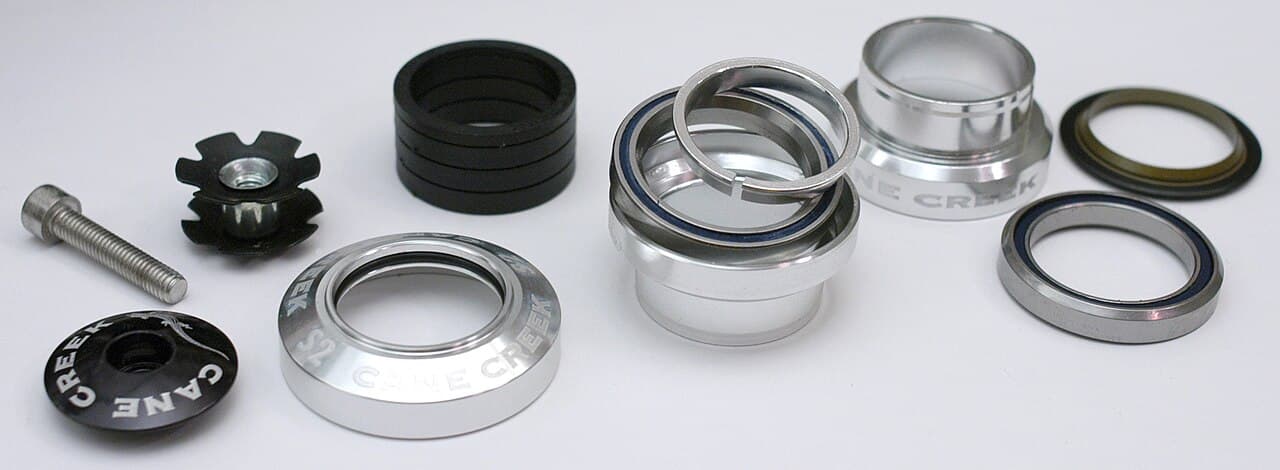
A pressed cup is visibly outside the head tube; the bearing sits in that cup.
Cup removal or replacement is pressed work even when the bearing itself is removable.
A loose headset may need adjustment, not a bearing. A cartridge with the same diameter can still have the wrong thickness, angles, position, seal, or dependency. Identify the upper and lower bearings separately, then check the exact replacement part and whether you already have a suitable spare.
A focused decision path for this exact job. Verify fit and safety details against the current maker instructions.
Headset Bearing Check
0 / 6 records
Six controlled records separate adjustment, structural inspection, bearing identity, pressed work, internal routing, current product source, and ownership. The text pad stays in this page only and is never sent to analytics.
Check incomplete
A bike name, steerer nickname, single diameter or photo is not enough to identify a replacement bearing.
Identification
SHIS describes frame and fork interfaces. It does not replace the separate upper/lower bearing record.
Cane Creek’s current guide says to inspect top and bottom separately; EC, ZS and IS can be mixed. Exact maker data comes first. Measurements support a missing record but do not create approval.
EC
A pressed cup is visibly outside the head tube; the bearing sits in that cup.
Cup removal or replacement is pressed work even when the bearing itself is removable.
ZS
A pressed cup sits mostly inside the head tube; only a small flange is visible.
Do not confuse a drop-in bearing with a permission to drive out the cup.
IS
No separate pressed cup; the bearing sits directly in a machined or molded frame seat.
The frame seat, bearing angles, compression ring, crown race, and orientation still must match.
Threaded
Adjustment and retention use threaded races, locknuts, washers, or maker-specific parts.
Do not transfer threadless preload steps, torque, or cartridge assumptions.
Job boundary
Replacement is only one branch. The page deliberately refuses a universal removal or torque sequence.
Start with wheel/brake movement, threadless preload and stack, stem engagement, compression plug/star nut, threaded adjustment, and structural condition. Play alone is not bearing-replacement evidence.
Separate bearing condition from routed hoses/cables, over-preload, corrosion, damaged seats, or impact. Do not “loosen until smooth” without the exact retention procedure.
Cane Creek says its current headsets use drop-in bearings, but the exact headset code, series, position, dimensions, angles, orientation, and current maker table still control the part.
Treat removal, support, press faces, drifts, frame/fork restrictions, replacement policy, and setting as a separate shop/tool decision.
Stop conditions
Products and tools
A store listing does not establish fit. Match the exact headset and bearing position before buying.
Confirm the headset part number
$26.99 observed at Performance Bicycle · usually ships in 2–3 days
One 41 mm, 36° × 45° bearing. It appears in the check only when the current headset-code source names this exact part for the correct position and the user still needs it.
View reference ↗Lower-cost source example
$5.99 sale observed at Performance Bicycle
A 41 mm, 36° × 45° title is still not permission to substitute it for BAA2151A or another exact maker part. The check never shows this record by dimensions alone.
View reference ↗seller breadth
28 in-stock variants observed on 26 August 2026
Breadth improves source availability, not compatibility. Upper/lower position, EC/ZS/IS, maker code, angles, dimensions, stack dependencies and ownership still control.
View reference ↗Professional-tool boundary
Ask a mechanic for a job-specific quote
Use a qualified mechanic for damaged seats or races, internally routed controls, unknown spacer arrangements, pressed cups or crown races, or missing service instructions.
View reference ↗How to verify
This site did not diagnose a real headset, remove a fork, measure preload or contact angles, press a cup, replace a crown race, compare bearings, or road-test a repair. Use the exact headset manual to confirm the replacement part and service procedure.